3D Bubble Match: Bubble Pop
Gloryway PuzzlePuzzle
4.9575.00 Reviews
- Version
- 2.2901
- Installs
- 1.00M
- Age Rating
- Everyone
Screenshots
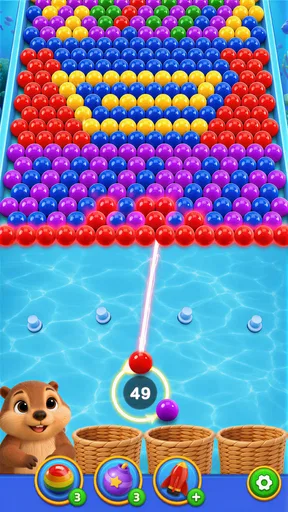
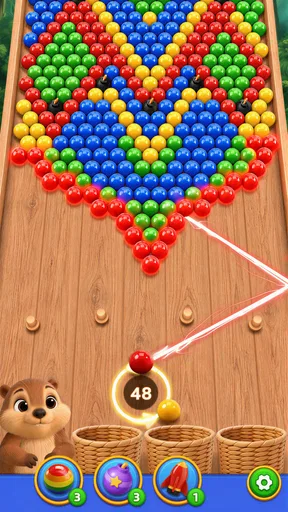
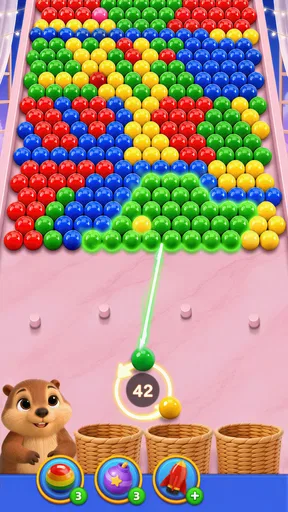
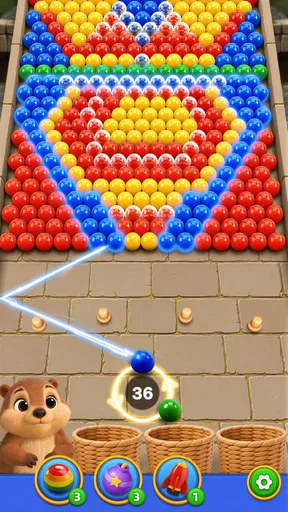
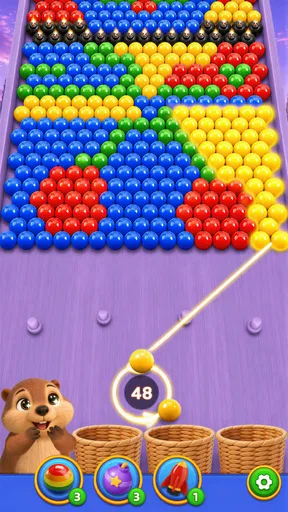
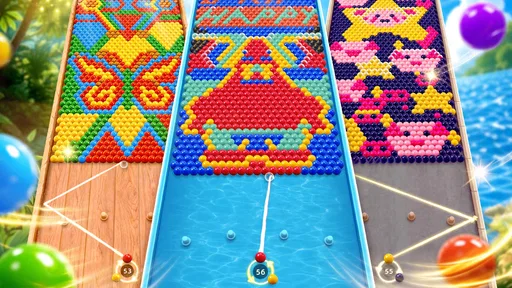
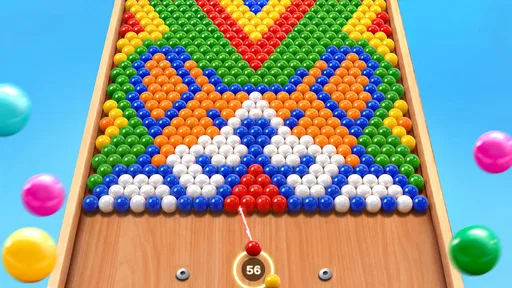
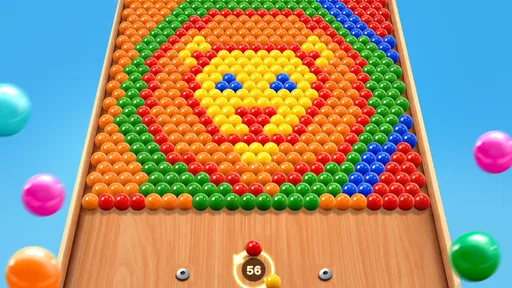
Our Review of 3D Bubble Match: Bubble Pop
 Analysis by Appyee
I spent time with 3D Bubble Match: Bubble Pop as a casual puzzle game, and my first impression was clear: it is built for people who enjoy matching colorful objects in a three-dimensional space rather than simply aiming at a flat board. The idea is easy to understand, but the change in perspective makes familiar bubble-popping play feel more visual and slightly more demanding.
It comes from Gloryway Puzzle and sits in the puzzle category. The game is free to start, carries an Everyone age rating, and is available for devices running Android 6.0 or later. That combination makes it approachable for a broad audience, especially anyone looking for a short game that does not require learning a complicated control system before the first round.
What matters most to me is that this is not trying to be a long-form adventure or a competitive action title. Its appeal is the small mental reset: open it, look for matches, make a few decisions, and stop when I have had enough. That simplicity is also where its limitations begin, so I would not recommend it equally to every puzzle fan.
How the free model affects the value
The basic download is free, which makes trying the game a low-risk decision. I can see why that matters for this type of puzzle: the format is easy to test during a spare moment, and I do not need to commit money before finding out whether the three-dimensional presentation suits me.
There are in-app purchases priced from $1.99 to $64.99 per item. I treat that range as an important part of the decision rather than a minor footnote. The free entry point is useful, but anyone who prefers a completely purchase-free experience should look carefully at how comfortable they are with the game’s optional spending model before investing a lot of time.
In practical terms, the free version is enough to judge the core experience. I would not buy anything immediately. I would first play through several sessions, notice whether I am enjoying the matching itself or merely chasing progress, and then decide whether an optional purchase would genuinely improve my experience. That approach protects the value of a free game without assuming that every paid item is necessary.
The game’s current version is 2.2901, and it was released on April 22, 2026. Those details are useful when checking compatibility or comparing the version shown on a device, but they do not change my main advice: evaluate the game by its moment-to-moment puzzle flow, not by the size of its number of updates or its popularity alone.
The kind of value the puzzle actually provides
The strongest value here is convenience. A three-dimensional matching board gives me something to inspect, rotate mentally, and organize, while the basic objective remains readable. I do not have to memorize a story, manage a large inventory, or understand a complicated character system. The game can fit into a short break, a waiting room, or the few minutes before going to sleep.
I also like that the visual structure can make me slow down. In a standard flat bubble shooter, the important question is often where to aim. In this game, the puzzle feeling comes more from recognizing relationships among objects arranged in space. That difference is small on paper, but it changes the rhythm from quick aiming to observation followed by a choice.
One useful habit is to avoid selecting the first obvious match. I get more value from looking across the whole arrangement first and identifying which group is blocking the most useful area. Removing an easy pair may feel satisfying, but preserving a better route can prevent the board from becoming visually confusing later. This is the sort of small planning decision that gives the game more substance than its short description suggests.
Another practical tip is to use a brief pause between moves, especially when the board becomes crowded. I find that rushing makes the three-dimensional layout harder to read. Taking a moment to separate foreground objects from those behind them helps me make fewer careless choices. That makes the game more relaxing and also gives the puzzle element a fair chance to work.
Why the three-dimensional presentation matters
The 3D approach is not just decoration from my point of view. It changes how I scan the board. I am not only checking color or shape; I am also judging position and visibility. This creates a mild spatial challenge that can appeal to players who find ordinary match-three grids too predictable but do not want the intensity of a timed action game.
That presentation can also create friction. Flat boards are immediately legible because every tile is visible in the same plane. A three-dimensional arrangement can require more attention, particularly on a smaller phone screen or when several objects overlap visually. If you prefer puzzles that communicate everything at a glance, the extra depth may feel like clutter instead of added fun.
I would approach the game differently depending on the device. On a phone, I would play in a quiet setting and keep the screen clean so the visual distinctions remain easy to follow. On a larger display, the spatial layout may be more comfortable to inspect. I would not choose it specifically for one device type without trying it first, because the same visual design can feel inviting on one screen and busy on another.
The best part of the design is the balance between familiar matching and spatial attention. It does not ask me to learn an elaborate rulebook, yet it gives me more to consider than a purely flat arrangement. That balance is the central reason I would recommend trying it.
Where it fits among familiar puzzle alternatives
Compared with a traditional bubble shooter, this game is less focused on lining up a shot and more focused on reading a three-dimensional collection. Players who enjoy planning angles, bank shots, and chain reactions may prefer a conventional shooter because its skill is more directly tied to aiming.
Compared with a standard match-three game, the visual field here feels less grid-based. A match-three board usually rewards quick pattern recognition across rows and columns. This game is a better fit when I want the matching task to feel more like sorting objects in a small space rather than scanning a spreadsheet of tiles.
Compared with a relaxing sorting game, the bubble theme keeps the experience closer to arcade-style puzzle play. That may make it more immediately engaging, although players seeking a very slow, meditative activity could find the presentation more active than expected. The right choice depends on whether you want spatial matching or simple visual tidying.
I would also distinguish it from story-driven puzzle games. There is no reason to choose this one if your main motivation is narrative, character development, or a large world to explore. Its value is concentrated in the puzzle interaction itself, which is a strength for short sessions but a weakness for anyone looking for a broader game package.
Everyday situations where it works well
Imagine having ten minutes before an appointment. I would choose this game over a long strategy title because I can begin immediately and stop without needing to remember a complicated plot or unfinished mission. The three-dimensional matching gives those minutes enough focus to feel like play rather than passive scrolling.
It can also suit a shared household device used by different age groups. The Everyone rating and straightforward puzzle premise make it easier to introduce than a game built around mature themes or complex controls. I would still let each player decide whether the visual layout is comfortable, since accessibility is not identical for every person even when the age rating is broad.
For someone who plays while commuting, the main question is concentration. The game may be a good companion when you can give the screen your attention, but it is not something I would use while walking or doing another task. The spatial arrangement rewards looking carefully, and divided attention can turn a simple puzzle into unnecessary frustration.
It may also work as a short mental warm-up. Before studying or beginning a creative task, I sometimes prefer a small activity with clear rules rather than a feed of unrelated content. A few matching decisions can provide that transition. I would keep the session short, though, because the benefit comes from focused play, not from forcing myself to continue after the puzzle stops feeling fresh.
Small strategies that improve the experience
My first recommendation is to scan for bottlenecks. Instead of asking only what can be matched now, I look for the cluster that limits access to the rest of the arrangement. Clearing that area can make later decisions easier. This is particularly useful when the board looks full and several possible matches compete for attention.
My second recommendation is to separate safe moves from speculative ones. A safe move is a match that clearly opens space or removes a visible obstruction. A speculative move is one chosen mainly because it looks attractive, without knowing what it will reveal or block. Making the safe move first gives me a clearer board and reduces the chance of turning a manageable puzzle into visual guesswork.
My third recommendation is to treat the game as an observation puzzle, not a speed test. Even if a level appears simple, rushing can make me overlook a better sequence. I get a more satisfying session when I use the first moments to understand the arrangement, then act with a plan. Players who naturally enjoy careful sorting will probably appreciate this more than players who want constant rapid feedback.
These habits also reveal the game’s trade-off. The more thoughtfully I play, the more interesting the spatial design becomes. But that also means the experience depends on my willingness to look closely. If I want instant reactions and almost no visual analysis, another casual arcade puzzle may be a better match.
Who should try it, and who should pass
I would recommend it to casual puzzle players who like matching games but want a visual twist. It is especially suitable for people who enjoy finding patterns, clearing space, and making small decisions without committing to a long session. The free starting price makes experimentation sensible, and the broad age rating removes one common barrier for households seeking an accessible puzzle.
I would also point it toward players who enjoy spatial organization. If you like arranging objects, spotting what is hidden behind something else, or planning which area to clear first, the three-dimensional board may keep your attention longer than a basic flat grid.
I would skip it if your ideal bubble game is all about precise shooting. The game’s appeal is not the same as mastering trajectories, so a dedicated shooter may provide a stronger sense of control for that audience. I would also skip it if you dislike free games with optional purchases or if any purchase prompts make you feel pressured, even when you have no intention of spending.
Players who need strong narrative progression should look elsewhere too. This is a focused puzzle experience, not a substitute for an adventure game. Likewise, someone who wants a completely predictable board may prefer a conventional match-three format, where the visual rules are often easier to read at a glance.
Popularity, accessibility, and expectations
The game has an average rating of 4.9 from around 30 thousand ratings, with about 575 written reviews, and it has passed 1 million installs. Those figures suggest that many players have found the format appealing, but I would not treat popularity as proof that it will suit everyone. The central question remains whether you enjoy the extra visual layer created by the 3D layout.
Its minimum Android requirement of 6.0 makes it available to a wide range of devices. Even so, compatibility is only the first part of the experience. Screen size, display clarity, and how comfortably you can inspect overlapping objects may influence your enjoyment more than the operating system requirement does.
The Everyone rating is reassuring for general access, but it should not be confused with a promise that every player will find the game equally easy. A broad age classification describes suitability of content, while the spatial presentation still asks for attention and visual interpretation. I would keep that distinction in mind when choosing it for a child or an older relative.
My buy-or-skip verdict
I would start with the free version and give it a fair trial rather than paying at once. The game offers a clear reason to exist: it takes familiar bubble matching and adds a three-dimensional observation challenge. For short breaks, casual play, and players who enjoy organizing visual spaces, that is enough to make it worth downloading.
I would not recommend spending money unless the free experience already feels enjoyable on your device. The available purchases range from $1.99 to $64.99 per item, so the sensible value test is personal and practical: only consider an optional purchase if it solves a problem you actually have and remains comfortable within your budget. The free entry point is the safest way to make that judgment.
My final view is positive but specific. 3D Bubble Match: Bubble Pop is worth trying for spatial puzzle fans, not for players seeking a traditional shooter or a story-heavy game. I like its approachable rules, its suitability for short sessions, and the way the three-dimensional layout rewards patience. I am less convinced by it for anyone who wants instant readability, uninterrupted action, or a purchase-free environment by default.
In other words, I would recommend downloading it, playing without spending first, and paying attention to how the board feels on your own screen. If the act of scanning, planning, and clearing the 3D arrangement is satisfying, the game can deliver good casual value. If that visual layer feels like extra work, there are simpler puzzle alternatives that will probably serve you better.
Verdict
Strengths of 3D Bubble Match: Bubble Pop
- Bright 3D visuals make matching bubbles easy to follow.
- Relaxing gameplay suits short breaks and casual sessions.
- Simple controls are accessible for players of most ages.
- Progressive levels provide a steady sense of achievement.
- Offline play is convenient when traveling or without Wi-Fi.
Limitations of 3D Bubble Match: Bubble Pop
- Later stages may feel repetitive after extended play.
- Some boosters can make progression feel dependent on rewards.
- Frequent pop-ups may interrupt the flow between levels.
- The 3D presentation can be demanding on older devices.
- Limited strategic depth may disappoint experienced puzzle players.
Other Releases by Gloryway Puzzle
View All
Blossom Sort® - Flower Games
Puzzle4.6
Similar Picks in This Category
View All
Block Blast!
HungryStudio4.8

Braindom: Brain Games Test
Lahana Game Studio4.6

AMAZE!
CrazyLabs LTD4.6

Sudoku - Classic Sudoku Puzzle
Oakever Games4.7

Art Puzzle - Puzzle Games
Easybrain4.8

Amaze GO!
Oakever Games4.9
Frequently Asked Questions
What is 3D Bubble Match: Bubble Pop and how is it played?
3D Bubble Match: Bubble Pop is a casual puzzle game built around matching colorful bubbles in a three-dimensional play area. You usually need to find and combine identical bubbles before the available space or time runs out. The controls are simple enough for quick sessions, but later levels can require careful planning, visual attention, and efficient use of boosters or special items.
Is 3D Bubble Match: Bubble Pop free to download and play?
The game can generally be downloaded and started without an upfront purchase, making it accessible to players who want a casual matching experience. However, free games commonly include optional in-app purchases, such as extra moves, boosters, lives, or other helpful items. Check the store listing and your device’s purchase settings before playing, especially if children may use the device.
Does 3D Bubble Match: Bubble Pop require an internet connection?
Basic puzzle gameplay may be available without a constant internet connection, which is useful when traveling or playing in areas with limited service. Nevertheless, some features can depend on connectivity, including advertisements, limited-time events, cloud synchronization, rewards, or purchase verification. Availability may vary by version and device, so it is best to test offline play after installation.
Are there advertisements or optional purchases in the game?
Players should expect that a free-to-play bubble puzzle game may display advertisements, particularly between levels or when requesting bonus rewards. Optional purchases may also be offered for boosters, additional attempts, or faster progress. These extras are not always necessary to enjoy the core matching mechanics, but they can influence the pace of progression and should be considered before downloading.
Is 3D Bubble Match: Bubble Pop suitable for children and casual players?
The straightforward matching mechanics make 3D Bubble Match: Bubble Pop suitable for many casual players and younger audiences who enjoy colorful, easy-to-learn puzzles. Difficulty can increase as levels progress, so some stages may require patience and concentration. Parents should still review the current age rating, advertising, privacy information, and in-app purchase settings before allowing children to play.
Play our best games!


